
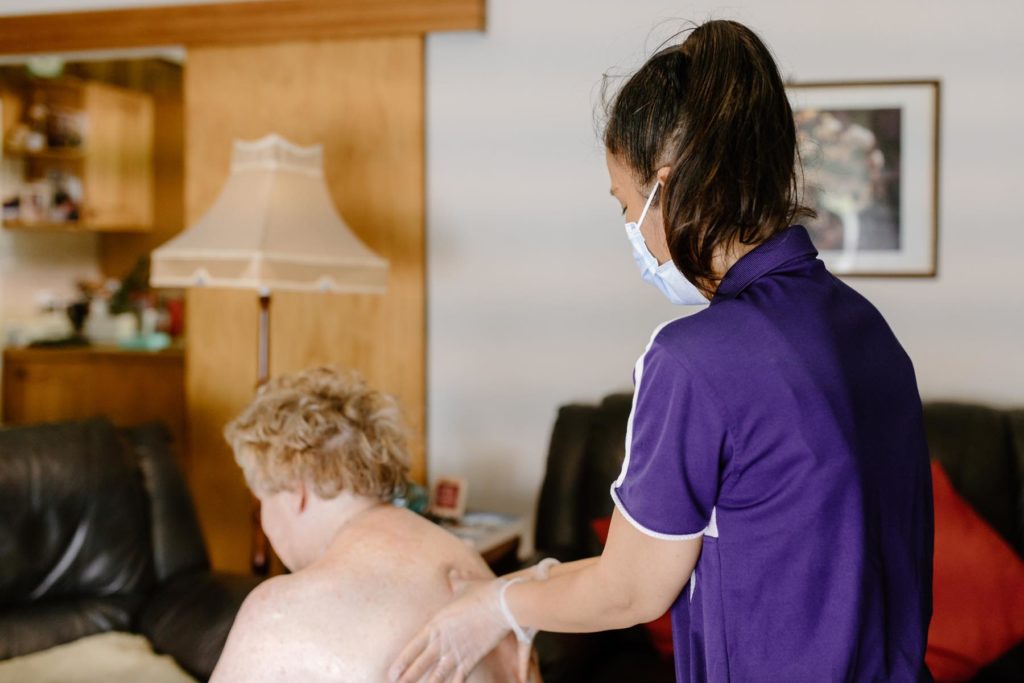
If you or a family member receives aged care support at home, you may be wondering whether remedial massage can be included in your Support at Home services.
The answer is: it may be possible, but it isn’t automatically funded simply because someone experiences pain or stiffness.
Under the Support at Home program, remedial massage may be provided where it meets the program’s requirements, including being delivered by an accredited therapist and included in a prescribed allied health treatment plan to address functional decline.
This guide explains how Support at Home works, when remedial massage may be appropriate, and what to do if you’re considering in-home massage as part of an aged care support plan.
Key Points
- Support at Home replaced the Home Care Packages Program and Short-Term Restorative Care Programme on 1 November 2025.
- Remedial massage may be included as part of Support at Home when it meets the program’s requirements.
- Remedial massage must be delivered by an accredited therapist and included in a prescribed allied health treatment plan addressing functional decline.
- Relaxation massage is not included as a funded Support at Home service.
- Ongoing Support at Home funding is allocated according to one of eight classifications and is provided through quarterly budgets.
- People who were already receiving a Home Care Package transitioned automatically to Support at Home under transitional arrangements.
- Whether massage can be funded depends on the person’s assessed needs, approved services, care plan, and available budget.
What Is the Support at Home Program?
Support at Home is the Australian Government’s program for helping older people access care and support while continuing to live independently at home.
It replaced the Home Care Packages Program and the Short-Term Restorative Care Programme on 1 November 2025. The program provides access to a defined range of services based on a person’s assessed care needs.
For ongoing Support at Home services, participants are assigned one of eight funding classifications based on their assessed needs. Funding is provided through quarterly budgets, which are used for approved care and services.
The current funding amounts were updated on 1 July 2026 and are indexed each July.
Can Support at Home Fund Remedial Massage?
In some circumstances, yes.
The Support at Home Service List allows remedial massage within the allied health scope when specific requirements are met. In particular, remedial massage must be:
- Delivered by an accredited therapist
- Included in a prescribed allied health treatment plan
- Provided to address functional decline
This means remedial massage isn’t automatically funded simply because a person has sore muscles, general aches, or wants a relaxing massage.
The purpose of the treatment needs to relate to the person’s assessed care needs and functional goals.
What About Relaxation Massage?
This is an important distinction.
Massage for relaxation is not included as a funded Support at Home service.
If someone wants massage primarily for relaxation or general wellbeing, they may need to arrange and pay for the service privately.
However, where remedial massage forms part of an appropriate allied health treatment plan addressing functional decline, it may be possible to access it through Support at Home.
How Does Support at Home Funding Work?
Support at Home funding is based on a person’s assessed needs and classification.
For ongoing services, there are eight classifications, with funding allocated through quarterly budgets. Ten per cent of the ongoing budget is allocated to care management.
Participants work with their provider to determine how their available funding can be used for approved services in accordance with their care plan and individualised budget.
Unspent funds from an ongoing quarterly budget can generally carry over to the next quarter, subject to the program’s rollover limit of $1,000 or 10% of the quarterly budget, whichever is greater.
If a person’s current budget is not enough to meet their assessed needs, they may be able to request a reassessment to determine whether a higher classification is appropriate.
Current Support at Home Classification Budgets
The ongoing classification amounts effective from 1 July 2026 are:
| Classification | Quarterly Budget | Annual Amount |
| 1 | $2,752.50 | $11,010.01 |
| 2 | $4,112.84 | $16,451.35 |
| 3 | $5,634.20 | $22,536.81 |
| 4 | $7,617.13 | $30,468.51 |
| 5 | $10,182.38 | $40,729.53 |
| 6 | $12,341.32 | $49,365.27 |
| 7 | $14,915.00 | $59,660.00 |
| 8 | $20,034.28 | $80,137.12 |
These amounts include the allocation for care management and are subject to annual indexation.
How to Explore Remedial Massage as Part of Your Care
Step 1: Make sure you have been assessed for Support at Home
Access to Support at Home begins with an aged care assessment through My Aged Care.
Generally, people need to be aged 65 or over, or 50 or over for Aboriginal and Torres Strait Islander people, to access government-funded aged care services, subject to the program’s eligibility requirements.
If you haven’t been assessed, you can start by contacting My Aged Care.
Step 2: Talk about functional difficulties
During the assessment and care-planning process, explain the difficulties that affect everyday life.
For example, you might discuss:
- Difficulty moving comfortably
- Reduced mobility
- Physical limitations affecting everyday activities
- Ongoing musculoskeletal concerns
- Changes in physical function
- Other issues that may contribute to functional decline
Be specific about how the problem affects the person’s ability to remain independent at home.
Step 3: Discuss whether allied health treatment is appropriate
If remedial massage is being considered, discuss it with the relevant health professional or care team.
The key question isn’t simply, “Can I get a massage?”
It is:
“Could remedial massage form part of an appropriate allied health treatment plan to address my assessed functional needs?”
This distinction is important because Support at Home funding is designed around assessed care needs and approved services.
Step 4: Check the care plan and individualised budget
Once services have been approved, the participant and provider work together on an individualised budget.
Before booking ongoing sessions, confirm:
- Whether remedial massage has been approved
- Whether the service meets the requirements of the person’s treatment plan
- How often sessions can be provided
- What funding is available
- Whether a participant contribution applies
Your Support at Home provider should be able to explain how the service fits within your budget.
Already Receiving a Home Care Package?
If you were receiving a Home Care Package when Support at Home commenced on 1 November 2025, you transitioned automatically into the new program.
Former Home Care Package recipients were moved to a transitional Support at Home classification equivalent to their previous HCP level. Their unspent HCP funds were also carried across under transitional arrangements.
However, the way funding and contributions work under Support at Home is different from the former HCP system.
If you’re unsure how your previous package, unspent funds or existing services have transitioned, speak with your current provider.
What Does This Mean for In-Home Massage?
For families, the most important point is that not every massage service is automatically eligible for Support at Home funding.
If remedial massage is being considered, the service needs to fit within the relevant Support at Home requirements and the person’s assessed needs.
For eligible clients, in-home treatment can also be convenient because the therapist comes directly to the person’s home. This can be particularly useful for older people who find travelling to appointments difficult.
Arranging In-Home Remedial Massage with Taking Care Mobile Massage
Taking Care Mobile Massage has been providing mobile massage services in aged care settings since 2004.
Our team works with older people, families and care partners to coordinate in-home massage services where appropriate.
If remedial massage has already been approved as part of an individual’s care arrangements, we can work with the client and relevant care team to coordinate appointments and deliver the service in the comfort of their home.
If you’re unsure whether massage may be suitable for your situation, the first step is to discuss your needs with your aged care assessor, health professional or Support at Home provider.
You can then contact our team to discuss our in-home massage service and whether we can assist with your approved care arrangements.
Frequently Asked Questions
1. Can I use Support at Home funding for any type of massage?
No. Support at Home does not automatically fund all types of massage.
Remedial massage may be included where it meets the program requirements, including being delivered by an accredited therapist and included in a prescribed allied health treatment plan to address functional decline. Relaxation massage is not included as a funded service.
2. Do I need a referral for remedial massage?
The important requirement is that remedial massage is included in a prescribed allied health treatment plan where it is being provided under Support at Home.
Your health professional, assessor or Support at Home provider can advise you about what is required for your individual circumstances.
3. Will Support at Home pay the full cost of my massage?
This depends on the service, your approved care arrangements, available budget and applicable contribution rules.
The Australian Government pays the full cost of clinical support services under Support at Home, while participant contributions can apply to other types of services. Your provider should explain the applicable costs before services commence.
4. Can my family member organise in-home massage for me?
Yes. A family member can help coordinate appointments and communicate with your care provider, particularly if you need assistance managing your services.
The actual funding approval, however, needs to follow the participant’s Support at Home care arrangements.
5. What if remedial massage isn’t currently included in my care plan?
Start by discussing your needs with your Support at Home provider or relevant health professional.
If your needs have changed, you may be able to request a review or reassessment. If additional services are required beyond the available budget, your provider can explain the options available to you.
6. Can I still book massage privately?
Yes. If a massage service isn’t approved or isn’t eligible for Support at Home funding, you can arrange the service privately with a provider. Private services outside the government-funded budget are paid for by the participant.
The Bottom Line
Support at Home can provide access to a range of services that help older Australians remain independent at home. Remedial massage may be one of the services available when it meets the program’s requirements and forms part of an appropriate allied health treatment plan.
If you’re considering in-home remedial massage, don’t assume it is automatically covered. Start with your assessed needs, speak with your health professional or Support at Home provider, and confirm that the service is approved before booking funded sessions.
For more information about arranging an in-home massage service, visit our Taking Care Mobile Massage in-home massage page.