Working with an older person, someone living with disability, or a client with complex health needs can require more than massage technique alone.
Therapists may need to adapt how they communicate, position a client, manage risk, obtain consent, respond to individual preferences, and work alongside families, carers, and other professionals.
That’s where specialised professional development can make a difference.
Massage with Confidence is Taking Care Mobile Massage’s industry-focused training course for massage therapists and therapists in training who want to build their confidence working with clients across aged care, disability and palliative care settings.
The course combines self-paced online learning with practical, face-to-face training and is currently listed by Massage & Myotherapy Australia as an endorsed education activity worth 30 CPE points.
Key Points
- Designed for qualified massage therapists and therapists in training with foundational massage knowledge.
- Focuses on working safely and respectfully with clients who may have complex health, mobility, or communication needs.
- Covers person-centred care and communication, aged care and massage, disability and massage, manual handling and risk management, manual lymphatic drainage, and industry and business understanding.
- Delivered through self-paced online learning followed by a two-day practical session.
- Endorsed by Massage & Myotherapy Australia for 30 CPE points.
- Supports therapists to develop skills relevant to community, aged care and disability settings.
Who Is Massage with Confidence For?
Massage with Confidence is designed for therapists who already have foundational massage knowledge and want to develop their skills for working with clients who may have more complex needs.
This can include therapists who are:
- Working or planning to work with older adults
- Moving into community or aged care settings
- Working with people living with disability
- Interested in palliative care environments
- Looking to strengthen their person-centred communication skills
- Wanting more confidence with manual handling and positioning
- Interested in developing their knowledge of manual lymphatic drainage
- Seeking additional professional development and CPE
The course is not intended to replace a foundational massage qualification. Instead, it adds specialised knowledge and practical skills that can help therapists adapt their existing massage skills to different client needs and care environments.

Why Person-Centred Care Matters in Aged Care
Working with older people requires more than knowing how to perform a massage technique.
The Australian Aged Care Quality and Safety Commission’s strengthened Quality Standards place a strong emphasis on person-centred care. Aged care services should be tailored to an individual’s needs, goals and preferences, while respecting their identity, autonomy, dignity and communication needs.
The standards also emphasise dignity, respect and privacy, including giving older people choice about how and when personal care or treatment is provided.
For massage therapists, this means understanding how to:
- Communicate with the individual
- Respect consent and personal choice
- Adapt to different communication needs
- Maintain privacy and dignity
- Recognise individual preferences
- Work respectfully with families, carers and support people
- Identify when a situation may require additional support or escalation
- Work within professional boundaries and responsibilities
These principles are particularly important when providing massage in someone’s home, residential aged care environment or community setting.
What You’ll Learn in Massage with Confidence
The course covers six key areas designed to help therapists apply their existing skills to more complex care environments.
1. Person-Centred Care and Communication
Learn how person-centred principles can shape the way you communicate with clients and adapt your approach to individual needs.
Topics include communication, adapting to diverse needs, feedback and reflection, and understanding how the client’s preferences influence the way care is delivered.
2. Aged Care and Massage
Explore considerations involved in providing massage to older adults, including adapting techniques and positioning according to individual circumstances.
The focus is on providing care that is respectful, appropriate, and responsive to the individual rather than relying on a one-size-fits-all approach.
3. Disability and Massage
Learn about adapting your approach when working with people with different physical, intellectual or sensory needs.
The emphasis is on communication, comfort, dignity, positioning and individualised care.
The course also introduces considerations relevant to working within disability support environments, including the NDIS context.
4. Manual Handling and Risk Management
Safe positioning and movement are essential when working with clients who may have reduced mobility or require assistance.
This section explores manual handling, risk awareness and strategies for helping maintain safety for both the client and therapist.
Importantly, training in manual handling does not replace workplace-specific policies, procedures, risk assessments or any additional training required by an employer or care provider.
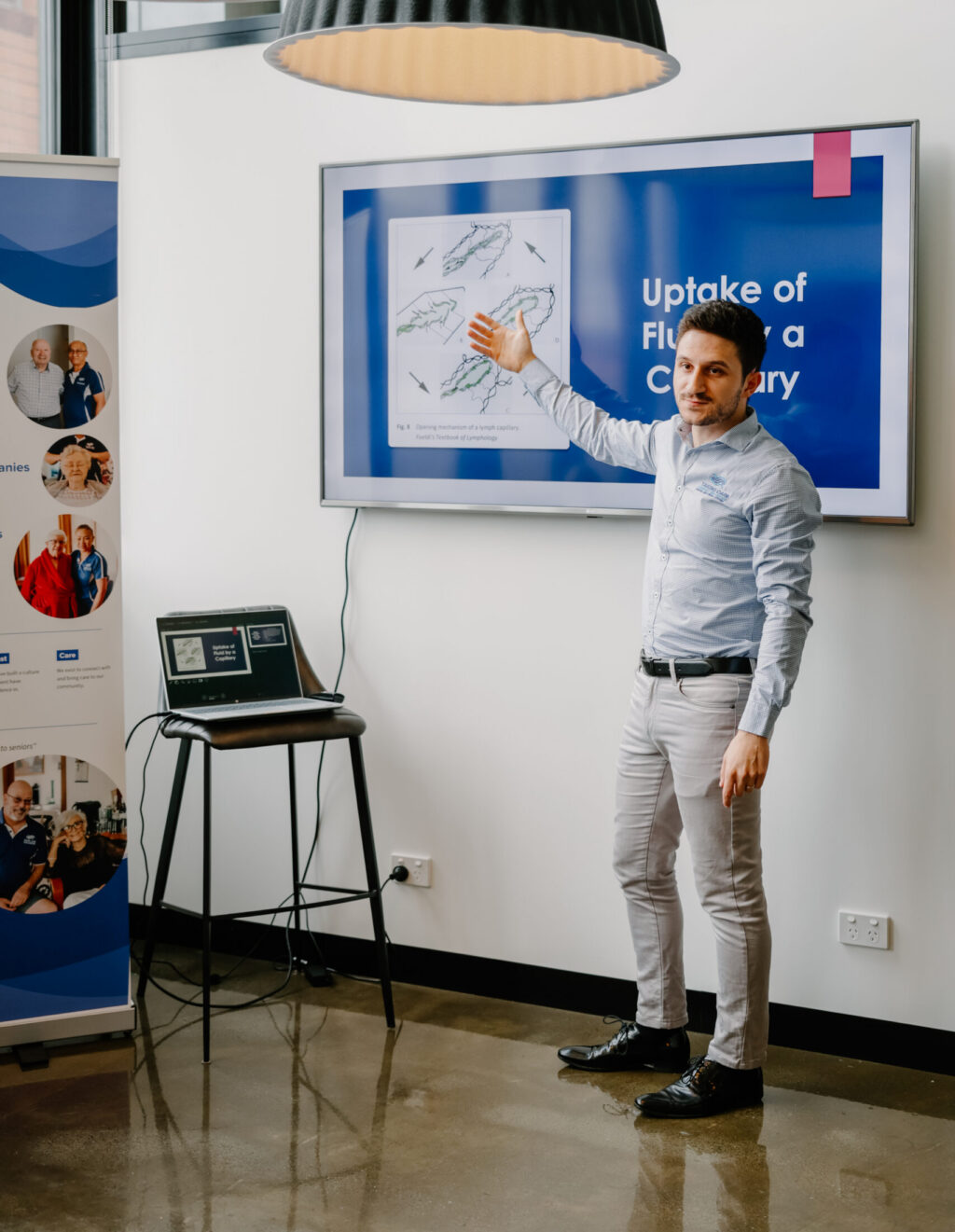
5. Manual Lymphatic Drainage
Manual lymphatic drainage (MLD) is another component of the course.
Participants are introduced to relevant lymphatic anatomy, treatment concepts and practical MLD techniques.
As with all massage techniques, therapists must work within their existing qualifications, professional scope, training and the individual client’s circumstances. Completing this course does not authorise a therapist to diagnose or treat medical conditions outside their scope of practice.
6. Industry and Business Understanding
Working in aged care and community settings also involves professional responsibilities beyond hands-on treatment.
The course covers areas including:
- Clinical records and safety
- Professional conduct
- Safety and professional boundaries
- Ethical practice and decision-making
- Time and workflow management
- Employment models
- Business basics
- Professional development
These areas help therapists understand the broader responsibilities that come with working in professional care environments.
How Is the Course Delivered?
Massage with Confidence combines online self-paced learning with practical face-to-face training.
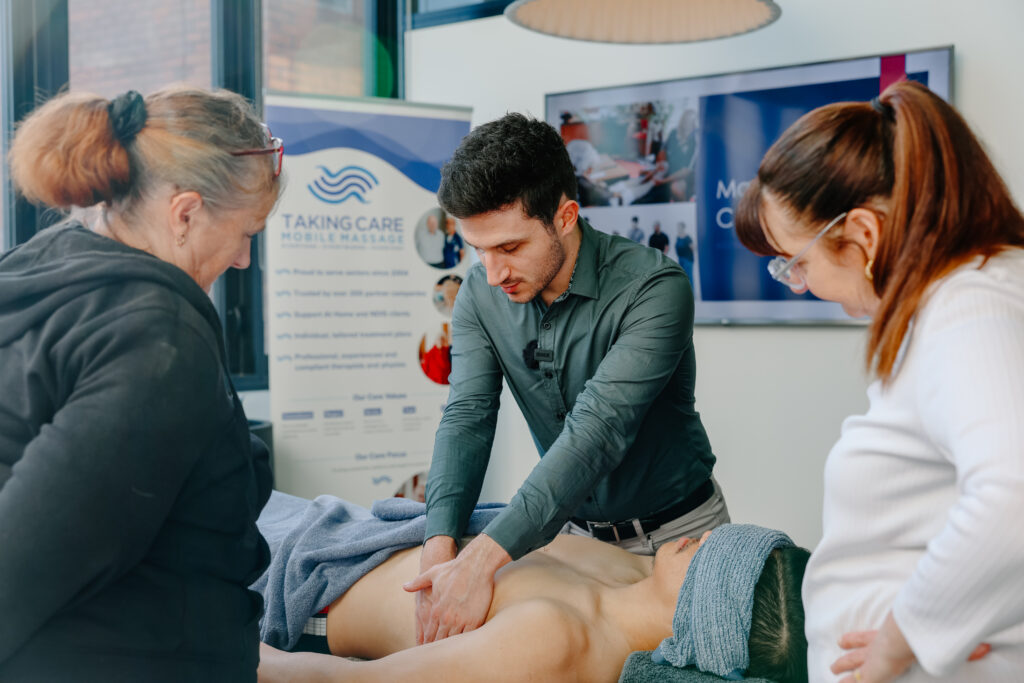
Participants work through the online modules before attending the practical component, where they can apply relevant skills and receive guidance from experienced educators.
The current Massage & Myotherapy Australia listing describes the course as six online self-paced modules followed by a two-day in-person practical session in a small class setting.
The course also includes assessments, with successful participants receiving a certificate of competency according to the course guide.
For upcoming dates, course requirements, and enrolment information, visit the Massage with Confidence course page.
How Many CPE Points Does the Course Provide?
Massage with Confidence is currently listed by Massage & Myotherapy Australia as an endorsed education activity worth 30 CPE points.
However, CPE requirements can vary depending on your professional association, membership category, and circumstances.
If you belong to an organisation other than Massage & Myotherapy Australia, check directly with that organisation to confirm how the course may count toward your individual professional development requirements.
The 30 CPE points should therefore be viewed as an endorsed education value for Massage & Myotherapy Australia members, rather than a universal annual requirement or guarantee that the course will satisfy every association’s requirements.
Why Specialised Training Matters in Aged Care and Community Settings
Australia’s aged care system is placing increasing emphasis on safe, person-centred and individualised care.
The strengthened Aged Care Quality Standards require providers and workers to support older people with dignity and respect, protect their privacy, recognise their individual needs and preferences, and deliver services that are person-centred and consistent with contemporary, evidence-based practice.
For massage therapists, working in these environments can involve challenges that may not arise in a conventional massage setting.
A therapist may need to work with:
- Reduced mobility
- Communication difficulties
- Cognitive impairment
- Different positioning requirements
- Complex care arrangements
- Family or carer involvement
- Home-based environments
- Residential aged care settings
- Individual risk and safety considerations
Developing the skills to recognise and respond to these differences can help therapists approach community and aged care work with greater confidence and professionalism.
Understanding Aged Care Workforce Requirements
Specialised training is one part of preparing to work in aged care. It does not replace the other requirements that may apply to workers.
For example, people working in paid or volunteer aged care roles are required to undergo the applicable workforce screening process. Depending on the circumstances, this can involve a police certificate or an NDIS Worker Screening Check.
Employers and registered providers may also have their own requirements relating to qualifications, insurance, policies, infection prevention, manual handling, documentation, workplace orientation and other areas.
Massage with Confidence should therefore be viewed as professional development that complements—not replaces—your existing qualifications, screening, insurance and workplace requirements.
Is Massage with Confidence Right for You?
This course may be a good fit if you already have foundational massage knowledge and want to develop your confidence in working with older adults, people with disability or clients with more complex needs.
It may be particularly useful if you’re looking to:
- Expand into community care
- Develop aged care massage skills
- Build confidence working with clients with different needs
- Improve your person-centred communication
- Develop manual handling and risk-awareness skills
- Learn practical MLD techniques
- Add endorsed CPE to your professional development
- Better understand the professional responsibilities involved in community care
If you’re still completing your foundational massage qualification, check the current course eligibility requirements before enrolling.
What Does the Practical Training Involve?
The practical component gives participants an opportunity to apply relevant concepts in a supervised learning environment.
Depending on the course content and practical requirements, participants work through areas such as:
The practical component gives participants an opportunity to apply relevant concepts in a supervised learning environment.
Depending on the course content and practical requirements, participants work through areas such as:
- Client positioning
- Manual handling considerations
- Person-centred communication
- Adaptation of massage techniques
- MLD techniques
- Safety and professional boundaries
- Case-based discussions and practical scenarios
The practical setting also provides an opportunity to ask questions and receive feedback as you develop your skills.
Does the Course Guarantee Employment?
No.
Massage with Confidence is professional development and does not guarantee employment, contracts, referrals or a particular income.
However, the skills covered are relevant to therapists interested in aged care, disability and community-based massage services.
Australia’s aged care workforce continues to face significant workforce pressures. CEDA has previously projected a substantial shortfall in direct aged-care workers, while more recent CEDA research continues to identify workforce shortages as an ongoing challenge for the sector.
These workforce figures should not be interpreted as a specific forecast for massage therapist employment. Instead, they demonstrate the broader importance of developing a capable workforce across Australia’s care sector.
Frequently Asked Questions
1. Do I need an existing massage qualification to enrol?
Massage with Confidence is designed for qualified massage therapists and people in training who already have foundational massage knowledge. It is intended as professional development rather than an entry-level qualification in massage. Check the current course requirements before enrolling.
2. Is Massage with Confidence recognised by Massage & Myotherapy Australia?
Yes. Massage & Myotherapy Australia currently lists Taking Care Mobile Massage as an endorsed education activity provider and lists Massage with Confidence as a 30 CPE point course.
3. Will the course satisfy my CPE requirements?
The course provides 30 CPE points through the Massage & Myotherapy Australia Endorsed Education Activities Program. Your individual CPE requirements depend on your membership category and professional association, so check with your association if you are not a Massage & Myotherapy Australia member.
4. Does completing the course qualify me to work in aged care?
The course provides professional development but does not replace the qualifications, screening, insurance, workplace requirements or other credentials that may be required for a particular aged care role.
Aged care workers are also subject to workforce screening requirements designed to protect the safety and wellbeing of people receiving aged care.
5. Does the course qualify me to provide manual lymphatic drainage?
The course includes practical MLD training. However, therapists must continue to work within their existing qualifications, professional scope, training and applicable workplace requirements.
The course should not be represented as a substitute for a separate specialist qualification where one is required.
6. How is the course delivered?
The course combines self-paced online learning with a two-day in-person practical component. Massage & Myotherapy Australia’s current listing describes six online modules followed by a two-day practical session in a small-class setting.
7. Does the course guarantee work with Taking Care Mobile Massage?
No. Completing Massage with Confidence does not guarantee employment or contracting opportunities with Taking Care Mobile Massage.
The course is designed to help therapists develop skills relevant to aged care, disability and community care environments.
Build Confidence for Community Care
Working with older adults and people with complex needs requires therapists to think beyond the technique itself.
It requires communication, adaptability, respect, safety awareness and a person-centred approach.
Massage with Confidence is designed to help therapists build those skills on top of their existing massage knowledge, with a combination of online education and practical training.
If you’re ready to develop your skills for aged care, disability and community settings, explore Massage with Confidence and view the next intake.