
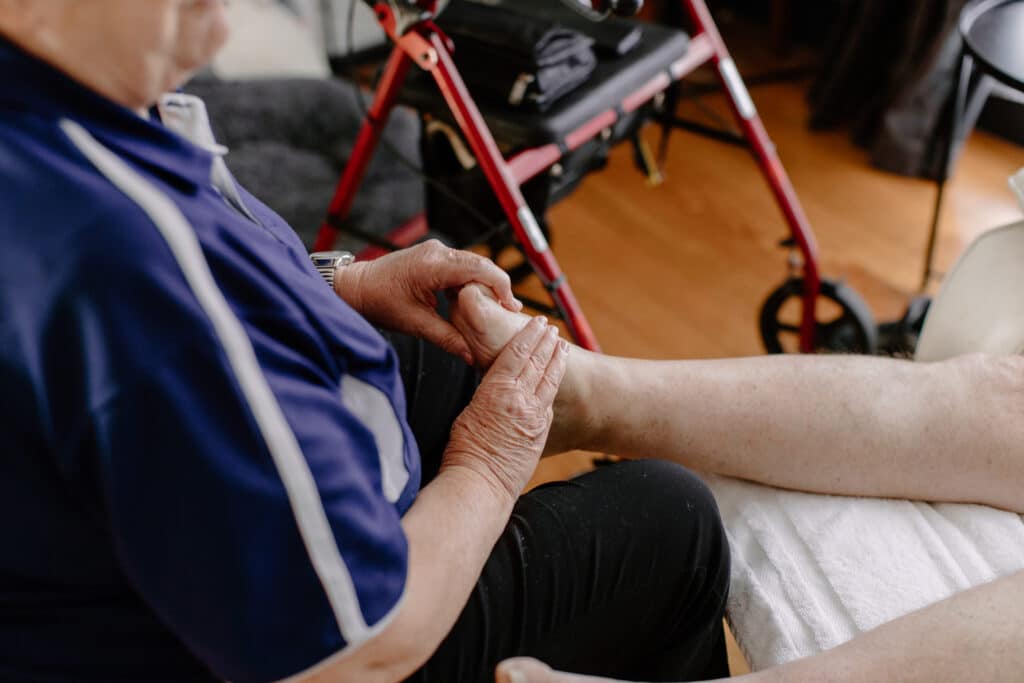
When families first consider massage for an older parent or loved one, one question often comes up:
“Is aged care massage just a regular massage?”
Not quite.
Aged care massage is an approach to massage therapy that is adapted to the needs, comfort, mobility, and health considerations of older people. Rather than following a standard massage routine, the therapist considers the individual’s physical condition, medications, mobility, skin sensitivity, cognitive needs and preferred position before and during the session.
For someone who may have arthritis, reduced mobility, muscle tension or difficulty travelling to appointments, a carefully adapted massage session can provide a comfortable way to support relaxation, mobility and overall wellbeing.
Key Points
- Aged care massage is massage therapy adapted to the needs and comfort of older people.
- Sessions can be adjusted for mobility limitations, age-related changes, health considerations and cognitive needs.
- Therapists may modify pressure, positioning, techniques and session length according to the individual.
- Potential benefits may include relaxation, reduced muscle tension, improved comfort and support for comfortable movement.
- The social connection provided by a familiar therapist can also be meaningful for older people who experience limited social interaction.
- Massage can be delivered at home, in a retirement village or aged care facility, depending on the service arrangement.
- Under Support at Home, remedial massage may be funded when it meets the program requirements, including being delivered by an accredited therapist and
- included in a prescribed allied health treatment plan addressing functional decline. Relaxation massage is not an eligible funded service.
What Is Aged Care Massage?
Aged care massage is not necessarily a separate type of massage technique. Instead, it describes an approach to massage that is specifically adapted for older clients and their individual circumstances.
Older people can experience changes in mobility, skin sensitivity, muscle tone, balance and physical comfort. Some may also be living with conditions such as arthritis, osteoporosis, dementia or other age-related health concerns.
A therapist working with an older client therefore needs to consider more than simply where the muscles feel tight.
Before a session, the therapist should understand relevant health information, medications, mobility limitations, preferences and any areas that should be avoided. During the massage, pressure, positioning, and techniques can be adjusted according to how the client responds.
The goal is not to provide a standard massage routine. It is to provide a comfortable and appropriately adapted experience for the individual.
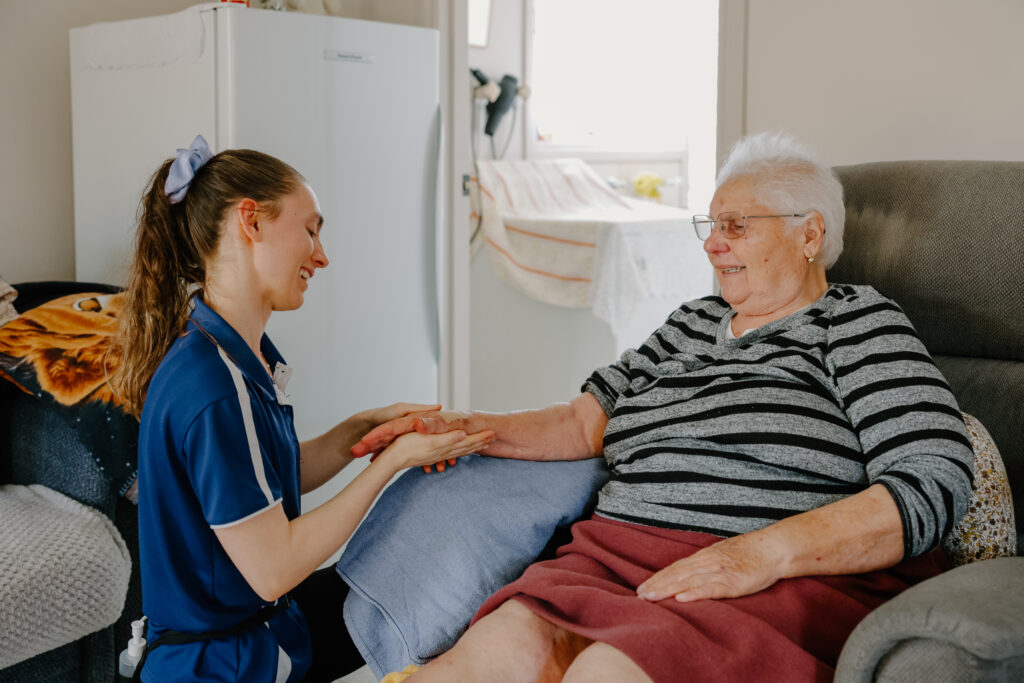
How Is Aged Care Massage Different From a Standard Massage?
A conventional massage session may focus on relaxation, general muscle tension, or recovery after physical activity.
Massage for an older person often requires a more individualised approach.
The therapist may need to consider:
- Reduced mobility or balance
- Arthritis or joint stiffness
- Previous injuries or surgery
- Skin sensitivity
- Medication and relevant health considerations
- Cognitive changes
- The client’s preferred position
- Comfort, communication and consent throughout the session
There is also no requirement for every client to lie on a massage table.
Depending on the person’s mobility and comfort, a session may be provided while the client is seated in a suitable chair or comfortably positioned on a bed.
This flexibility can be particularly helpful for people who find getting onto or off a traditional massage table difficult.
What Are the Potential Benefits of Massage for Seniors?
Massage affects people differently, and it should not be considered a replacement for medical treatment, physiotherapy or other prescribed care.
However, an appropriately adapted massage session may support several aspects of an older person’s wellbeing.
1. Relaxation and Comfort
Gentle massage can help reduce muscle tension and promote relaxation.
For an older person experiencing general stiffness or physical discomfort, having time to relax in a calm environment may be an important part of their overall wellbeing.
2. Supporting Comfortable Movement
Muscle tension and stiffness can sometimes make everyday movement uncomfortable.
Appropriately adapted massage may help a person feel more comfortable and relaxed around areas of muscular tension. For people with more complex mobility concerns, massage should complement—not replace—appropriate medical or allied health care.
3. A Positive Sensory Experience
For some older people, particularly those with limited mobility, gentle and appropriate touch can provide a calming sensory experience.
The therapist should always monitor the client’s comfort and response and adjust or stop the session if necessary.
4. Social Connection
The benefits of an in-home massage visit aren’t necessarily limited to the physical treatment.
For older people who live alone, have limited mobility or don’t regularly receive visitors, a scheduled visit from a familiar therapist can provide meaningful one-on-one interaction.
The conversation, familiarity and routine can become an enjoyable part of the person’s week.
For people living with dementia, therapists can also adapt their communication and approach to support familiarity, comfort and reassurance.
What Does an Aged Care Massage Session Look Like?
At Taking Care Mobile Massage, every client has individual needs, so there isn’t a single routine that applies to everyone.
Before providing treatment, our team gathers relevant information about the client’s health, mobility, preferences, and massage requirements.
The therapist then adapts the session accordingly.
Depending on the client’s circumstances, the massage may take place:
- On a massage table
- In a suitable chair
- On a bed
- In the client’s home
- In a retirement village
- Within an aged care facility
The therapist can also adjust pressure, positioning, and techniques throughout the session based on the client’s comfort.
The aim is to make the experience safe, respectful, comfortable, and appropriate for the individual.
Can Aged Care Massage Be Funded Through Support at Home?
This is an important distinction for families.
Since 1 November 2025, Support at Home has replaced the Home Care Packages Program and the Short-Term Restorative Care Programme.
Under the current Support at Home Service List, remedial massage may be included as an allied health service when it is delivered by an accredited therapist and included in a prescribed allied health treatment plan to address functional decline. Massage for relaxation is specifically listed as out of scope.
This means that not every massage session for an older person will automatically qualify for government funding.
If you are considering funded remedial massage, speak with your Support at Home provider or relevant health professional to confirm whether the service is appropriate and approved within the person’s care arrangements.
What About People Who Previously Had a Home Care Package?
People receiving Home Care Packages transitioned to Support at Home when the new program commenced on 1 November 2025.
If you previously received services through a Home Care Package, your current funding and service arrangements may now operate under the Support at Home framework.
If you are unsure whether an existing massage service can continue, or how it fits within your current budget, speak with your Support at Home provider.
Aged Care Massage With Taking Care Mobile Massage
Taking Care Mobile Massage provides in-home massage services designed around the individual needs of older clients.
Our therapists understand that older clients may have different mobility levels, comfort requirements and health considerations. That’s why we don’t approach every session in the same way.
We can provide massage in a client’s home, retirement village or aged care environment, depending on the arrangement.
Where remedial massage has been appropriately approved under a client’s care arrangements, our team can work with the client, family and relevant care provider to coordinate the service.
If you’re arranging massage for yourself, a parent or another loved one, our Aged Care Massage service provides more information about what we offer.
Frequently Asked Questions
1. Is aged care massage safe for someone living with dementia?
Massage may be suitable for some people living with dementia, but each person should be considered individually.
The therapist should adapt communication, positioning, pressure and session length according to the person’s needs and responses. Family members or carers can also provide helpful information about the person’s preferences and communication style.
If there are concerns about whether massage is appropriate, discuss them with the person’s healthcare professional or care team.
2. Can aged care massage be funded through Support at Home?
Potentially, but it is not automatic.
Under the Support at Home Service List, remedial massage may be provided by an accredited therapist where it is included in a prescribed allied health treatment plan to address functional decline. Relaxation massage is not included as a funded service.
Your Support at Home provider can confirm whether the service is approved within the person’s care arrangements and available budget.
3. What’s the difference between aged care massage and remedial massage?
Aged care massage describes an approach to massage that is adapted to the needs, comfort and circumstances of an older person.
Remedial massage is a more specific therapeutic service. Under Support at Home, remedial massage may be funded when it meets the program’s requirements, including being included in a prescribed allied health treatment plan addressing functional decline.
A session for an older person may therefore use appropriate massage techniques while also taking into account age-related health, mobility and comfort considerations.
4. How often should a senior have a massage?
There is no single frequency that is right for everyone.
Some people may prefer regular weekly or fortnightly visits, while others may choose occasional sessions.
The appropriate frequency depends on the individual’s goals, comfort, health considerations, and care arrangements. Where massage forms part of an approved treatment plan, the recommended frequency should align with the relevant plan and professional guidance.
5. Does the client need to prepare anything before an in-home massage?
Usually, very little preparation is required.
The therapist will bring the equipment needed for the session, such as a massage table where appropriate.
The most important thing is to let the therapist know about any changes in health, mobility, medications, pain, or comfort before the session begins.
Supporting Comfort, Connection and Wellbeing at Home
Aged care massage is about more than simply applying massage techniques to an older body.
It is about adapting the experience to the person.
For some clients, that may mean gentle massage to help them relax. For others, it may mean adjusting the session around reduced mobility or providing a comfortable alternative to travelling to a clinic.
And for someone who spends much of their time at home, the regular presence of a familiar therapist can provide an additional sense of connection and routine.
If you’re considering massage for yourself or an older loved one, talk to our team about our Aged Care Massage service.